
Piece 6: Practices of Attention That Do Not Require a Monologue
This series began with a simple question. When we ask someone to think, to pray, or to remember, what are we actually asking them to do? Over five pieces, I have been following that question through inner speech, attention, prayer, lectio divina, and the pressure of our phones. I have not been trying to settle a psychological debate. I have been asking what our ordinary Christian instructions assume about the inner life, and what happens when those assumptions don’t apply to everyone.
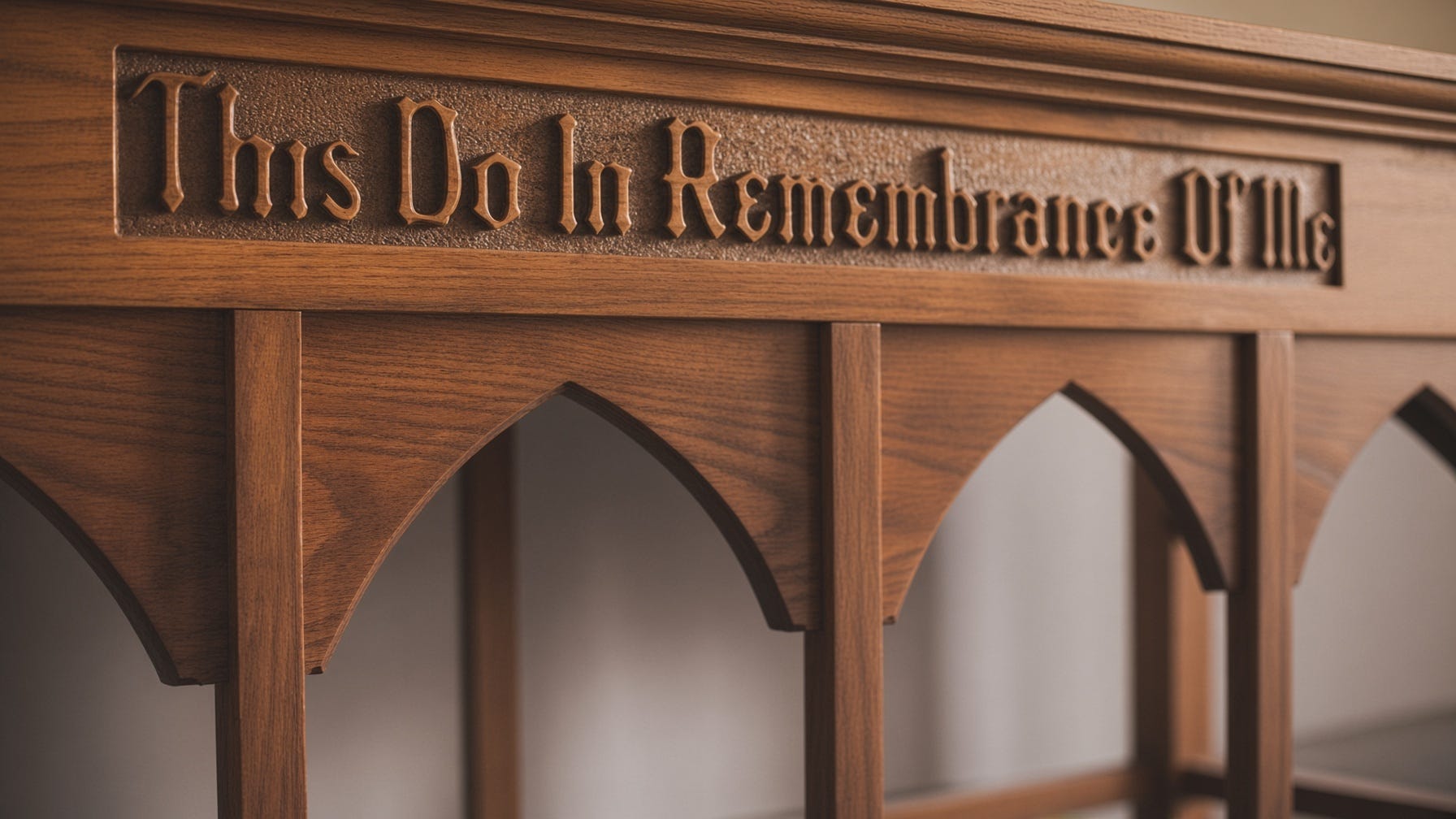
In the last piece, I said I wanted to return to anamnesis, the remembering the church does at the Lord’s Table, and consider practices of attention that don’t depend on a running inner commentary. That is the work of this final piece. As before, I write as a teacher interested in Christian formation, not as a specialist in the psychology of inner speech or sacramental theology. I want to look at a practice the church already has, and at what it might mean for the people who gather to do it, including those who lead.